A schedule built for the store
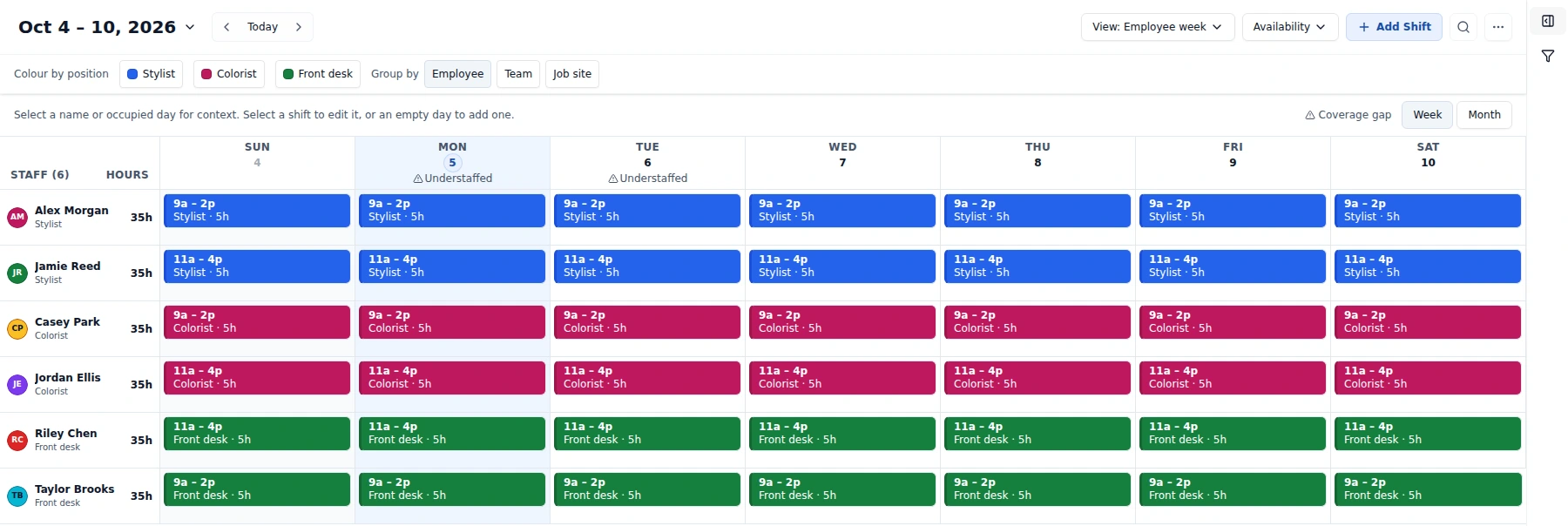
Use configurable positions and a clear calendar to make handoffs and coverage visible.
 WorkShift HQ
Back to home
For retail teams
WorkShift HQ helps retail managers coordinate floor coverage, availability, time off, team communication, and hours without relying on a shared spreadsheet.

A practical fit
Set up store positions for opening, floor, stock, and close. Review the week against configured targets, then publish the version staff should follow.
Use configurable positions and a clear calendar to make handoffs and coverage visible.
Keep announcements, messages, tasks, and documents available to the people who need them.
Compare scheduled and recorded time in timesheets; owners can review labor-cost estimates for the next plan.
Stores share one workspace schedule, with location filters, hours and targets. Multiple locations require the Salon plan.
Managers inspect each site without splitting the roster into separate workspaces.
Staff ask for cover and a manager approves it.
Changes stay visible and under manager control.
Store procedures are kept with the team.
Keep store procedures available in the shared team hub.
Schedules are planned privately, reviewed, then published as a whole workspace. Sending published schedules by email is a separate step, and you can resend later.
Locations
Each shift is assigned to a site.
Compare coverage store by store.
Time off
Leave is visible when assigning floor shifts.
Review approved leave while assigning a shift.
Documents
Opening and closing procedures live with the team.
Keep store procedures in the shared team hub.
Time and cost
Revenue is entered manually in Job Analytics.
Planned and recorded hours can be compared.
Yes. Set up staff, positions and business hours, collect availability, then build a private plan. Review changes before publishing all workspace changes. You can import staff and draft shifts from a spreadsheet or another scheduling tool’s export; start with a manageable period.
Staff can use the browser portal. Ask the manager for the approved companion-app install route if you prefer it. Requests and other tools depend on individual permissions; internet access is required.
No. Keep booking, specialist industry tools, accounting and payroll in their own systems. WorkShift supports staffing decisions, coordination and reviewed hours; it does not certify staffing sufficiency or run payroll.
Check configured staffing targets, then review all workspace changes before publication. Publication can queue change notices; monthly schedule-email resends are separate.
01
Place shifts around staff, availability, time off, roles, hours, and locations.
02
Compare the plan with configured targets and inspect exact gaps before assigning.
03
Check private edits and conflicts across the workspace before you publish.
04
Make the reviewed workspace schedule visible to staff.
05
Staff can check published shifts in the app or portal; email is a separate step.
Staff self-service tools depend on per-person permissions; cover claims need manager approval. Owners and individually pay-approved managers can review pay reports. Time-clock records need review and do not process payroll. Solo and Studio support one location; Salon supports multiple locations. Email and optional opted-in text alerts require configured providers. Ask your manager for the current approved staff-app install route; public app-store availability is not confirmed.
WorkShift HQ